
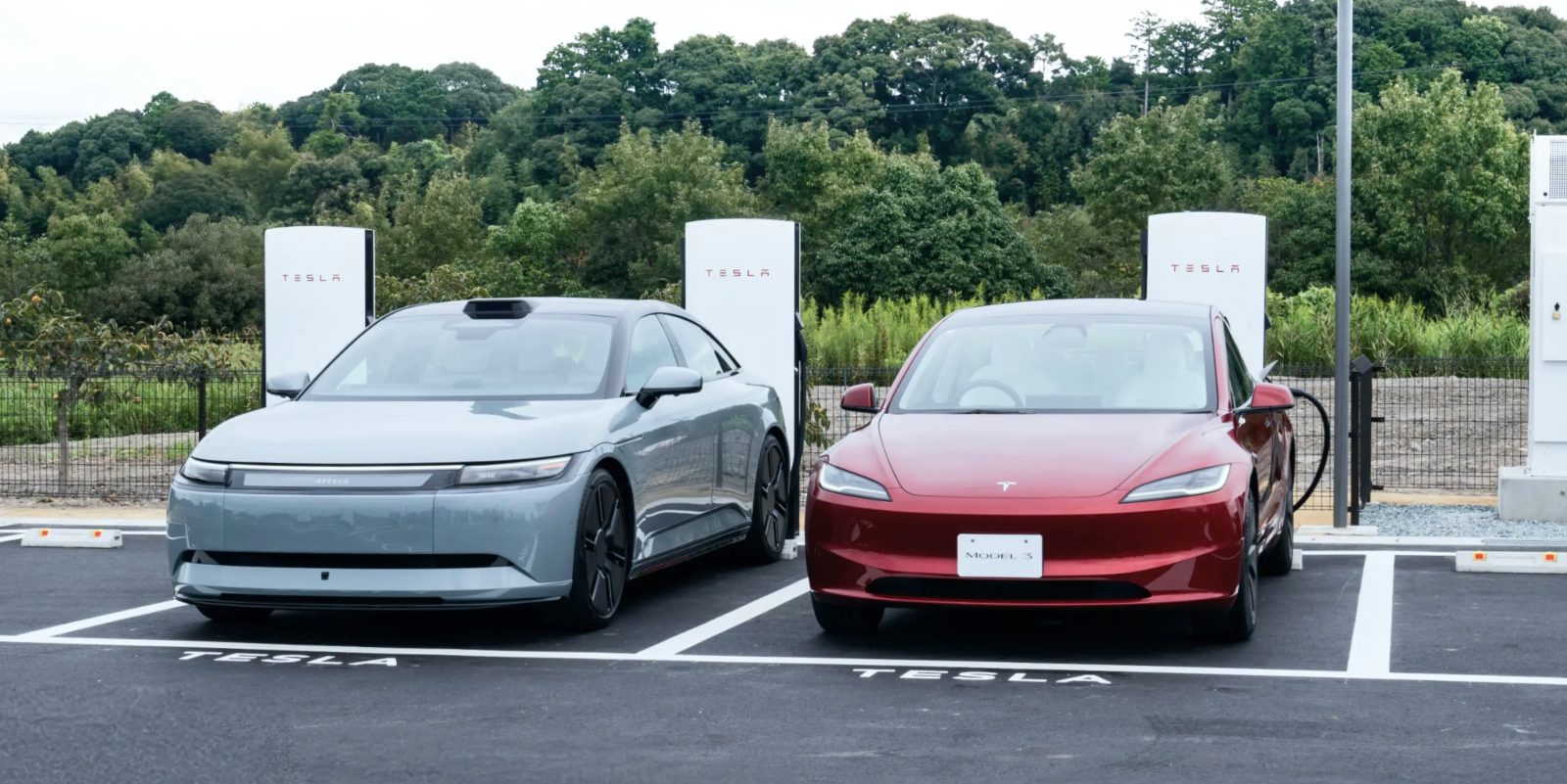
Tesla is bringing back free Supercharging for new Model 3 Premium and Performance orders in North America, bundling one year of complimentary charging with new purchases.
The automaker also used the announcement to take a shot at non-Tesla EV owners using the Supercharger network, claiming they pay a “~40% premium” — but the actual figure is closer to 30-35% based on available data.
Free Supercharging returns for Model 3
Tesla North America announced the new incentive on X today, confirming that new orders of Model 3 Premium and Performance now come with one year of free Supercharging.
The move is the latest in a long series of free Supercharging offers Tesla has deployed over the years to boost sales. The automaker has previously offered free Supercharging on Model S and Model X as part of the Luxe Package, and has used similar incentives for inventory vehicles and trade-in promotions.
Notably, this new offer applies to custom orders — not just inventory — and is limited to the higher-trim Model 3 Premium and Performance variants, not the base Model 3.
Tesla’s non-Tesla pricing claim doesn’t quite add up
In the same announcement, Tesla claimed that “all Teslas pay the lowest Supercharging rates” and that non-Tesla EVs pay a “~40% premium or need a subscription.”
The ~40% figure is on the high end of what data supports. Our analysis found that the non-Tesla Supercharger premium sits at about 30-35%, with some variation depending on location and time of day. At peak hours in high-cost markets like Los Angeles, the premium can reach 35-37% — with non-members paying about $0.60/kWh versus $0.45/kWh for Tesla owners. During off-peak hours, the gap narrows to as low as 23%.
Non-Tesla EV owners can eliminate this gap entirely with a $12.99/month Supercharging Membership, which grants them the same per-kWh rates as Tesla vehicles. The membership pays for itself with roughly 80-100 kWh of charging per month, depending on location.
This pricing structure has been in place since Tesla first opened the Supercharger network to non-Tesla EVs in 2023. It’s not new — but Tesla actively highlighting it in marketing is.
Supercharger pricing has been a rollercoaster
Tesla’s Supercharger rates have fluctuated significantly over the past few years. In 2022, prices spiked to $0.50/kWh and above in California and across Europe as energy costs surged. Tesla then implemented a price reduction in late 2024 of roughly 7% as the network hit all-time utilization highs.
Today, most US Supercharger stations sit in the $0.30-0.45/kWh range, with high-demand areas reaching $0.50-0.60+ at peak. Tesla has also rolled out dynamic live pricing — launched as a pilot at about 10 California stations in May 2025 and since expanded to 550+ stations — that adjusts rates based on real-time utilization rather than fixed peak/off-peak schedules.
Electrek’s Take
Top comment by Well-O
VW was offering 3 years of free fast-charging when we bought our ID.4.
So far we took advantage of that, what, 10 times maybe? Less than 20.
Charging at home is just too convenient and inexpensive.
Free Supercharging is a nice perk, but let’s put the actual value in perspective. For the average Tesla owner who charges at home, which is the vast majority, one year of free Supercharging isn’t worth that much. Most home-charging Tesla drivers only use the Supercharger network for road trips and occasional top-ups. That might add up to 350-600 kWh of Supercharging per year, saving roughly $120-260 at current rates. It’s a nice bonus, not a deciding factor.
Where this incentive actually matters is for people who can’t charge at home — apartment dwellers, condo owners, anyone without access to a home outlet or garage. For those buyers, who rely on Supercharging as their primary charging method, one year of free Supercharging could easily be worth $600-1,500+. That’s a meaningful financial incentive and could genuinely push someone to choose a Tesla over a competitor.
As for the ~40% premium claim for non-Tesla EVs — Tesla is stretching the numbers a bit. The real premium, unless Tesla is now increasing prices, is closer to 30-35%, and it disappears entirely with the $12.99/month membership. Still, the broader point holds: Tesla does offer a pricing advantage to its own vehicles at its own network, and as more automakers adopt NACS and send their customers to Superchargers, that built-in discount becomes a real competitive selling point. Tesla is smart to start marketing it directly.
The incentive being solely on Model 3 is also interesting. It’s starting to be clear that Tesla is having more issues sellilng those than Model Y, especially the more premium trims.


FTC: We use income earning auto affiliate links. More.


Comments